
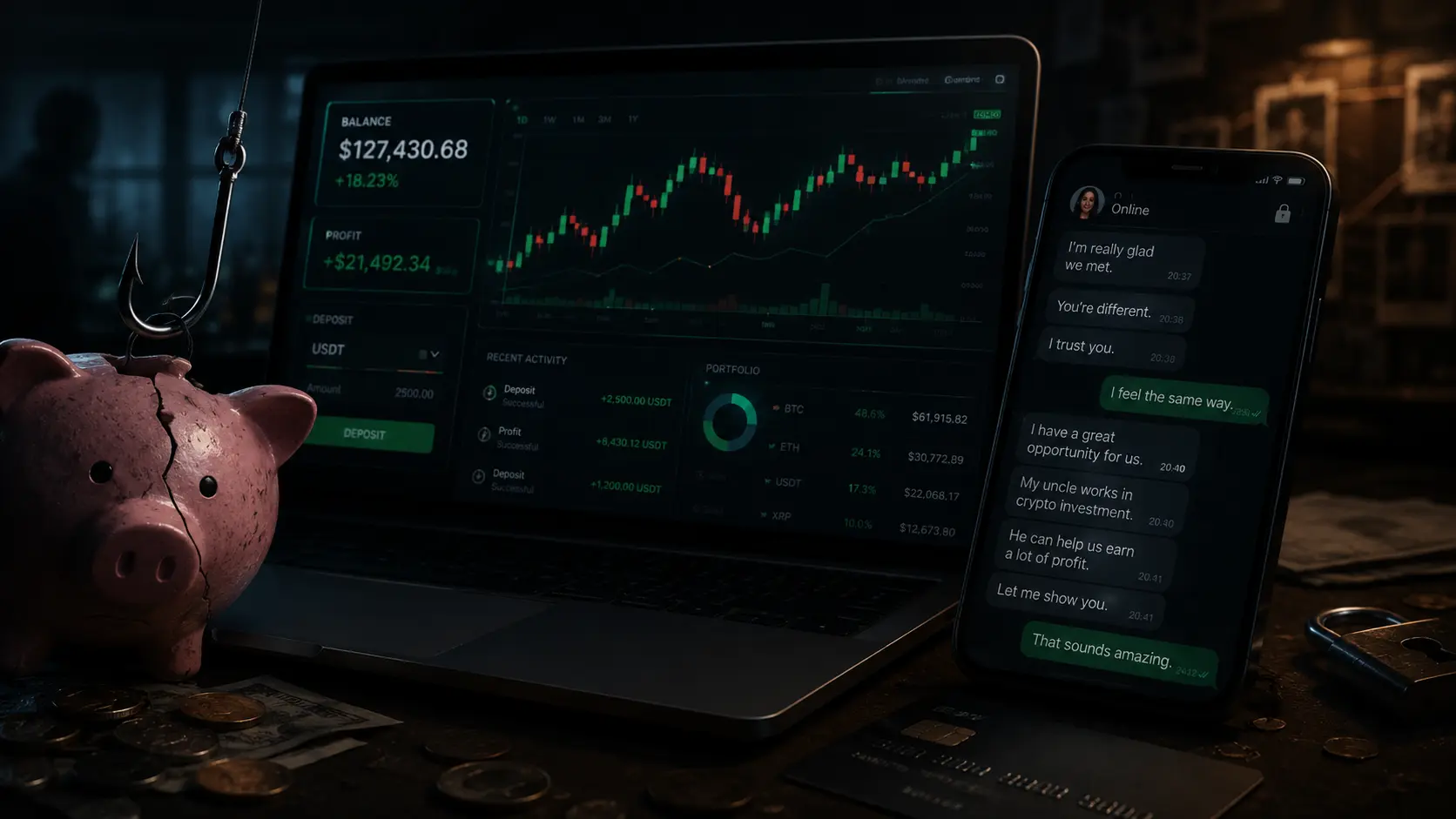
Pig-butchering fraud combines relationship-building with a fake cryptocurrency or investment opportunity. A stranger or new online contact cultivates trust, introduces a platform, displays apparent gains, and then encourages larger deposits. The website may show a balance, but the balance is not proof that money is held. When a victim tries to withdraw, the operator may demand taxes, fees, or more deposits. Stop sending money, preserve wallet addresses and messages, contact the exchange or bank through an independent route, and report the fraud promptly.
What to remember
- A warm relationship does not validate an investment platform or a trading claim.
- A dashboard balance is only a representation unless an independent custodian confirms the assets.
- Requests for more money to unlock a withdrawal are a second warning, not a solution.
- Save transaction hashes, wallet addresses, domains, usernames, and the complete conversation.
- Do not pay a recovery service that promises guaranteed blockchain retrieval for an advance fee.
The pattern: attention first, investment later
The opening can look ordinary: a wrong-number message, a social-media reply, a dating-app match, or an introduction through a professional group. The contact is patient and conversational. They may discuss family, travel, work, or personal goals before mentioning money. That delay is part of the design because a financial request feels different when it comes from a stranger than when it comes from someone who has become emotionally familiar.
The investment proposal is often framed as help rather than a sales pitch. The contact claims to have discovered a method, an uncle, a mentor, or a private platform. A small transfer may appear to produce a gain. The victim is then encouraged to increase the amount, borrow, liquidate savings, or bring in a spouse. The sequence turns trust into permission to ignore ordinary financial boundaries.
Why a fake platform can feel convincing
Fraudulent platforms imitate the visual language of a brokerage: charts, account numbers, customer support, identity checks, and withdrawal buttons. A victim may see a rising balance and even receive a small early payment. The operator controls the data shown on the screen, so the appearance of profit is not independent evidence of a trade or a real asset.
Check the domain, legal entity, custody arrangement, registration, and withdrawal rules from sources you locate yourself. A logo, an app-store listing, a celebrity image, or a customer-service chat does not prove legitimacy. Ask who holds the funds, which regulated entity can confirm ownership, and whether an independent statement exists. If the answer is vague, stop before adding money.
Escalation, secrecy, and the withdrawal trap
The scheme grows through urgency and graduated commitment. A contact may call a deposit an opportunity available only today, praise the victim for being disciplined, or say that relatives who object simply do not understand. The victim is encouraged to keep the account private, which removes the independent perspective most likely to interrupt the pattern.
When withdrawal is requested, the explanation changes. The account may be frozen for tax review, anti-money-laundering checks, a minimum balance, or a legal clearance. Every new payment is described as the final step. It is not. Sending more money usually increases exposure and gives the operator a reason to continue contact.
The wider network behind the messages
Law-enforcement reporting describes these schemes as organized, transnational operations rather than one lonely fraudster working alone. Different people may handle introductions, daily conversation, technical support, payment instructions, and threats. Some scam-center workers have themselves been trafficked or coerced. That context explains the industrial scale without reducing the responsibility of the organizers who direct the theft.
The use of cryptocurrency can make transfers fast and cross-border, but it does not make them untraceable. Transaction hashes, wallet addresses, exchange records, messages, and domain data can help investigators. Do not attempt to confront the network or publish personal information. Give the records to the exchange, law enforcement, and relevant reporting channel.
What to do in the first 24 hours
Stop contact and stop payments. Call the bank, card issuer, or exchange using a number or website you find independently. Ask whether a transfer can be recalled, an account can be frozen, or a suspicious recipient can be flagged. Change passwords from a trusted device if credentials were shared, and review account sessions and recovery settings.
Create a clean evidence folder containing the original messages, profile links, phone numbers, domain names, screenshots, payment confirmations, wallet addresses, transaction IDs, and a dated chronology. Report to the FBI Internet Crime Complaint Center or the relevant authority in your country. Emotional support matters: shame and isolation help the scheme remain hidden, while early disclosure can protect other people.
Why recovery promises are often another scam
After a loss, a new person may claim to be a lawyer, blockchain investigator, exchange employee, or government agent who can recover the funds. They may know the victim’s name, transaction amount, and wallet address because those details circulate between criminal groups or are visible online. A genuine authority will not demand an unexpected cryptocurrency payment to unlock a recovery.
Verify any professional through an official register and use contact details you find independently. Do not send passwords, seed phrases, remote access, identity documents, or more money. Recovery is uncertain and may take time. The immediate priorities are containment, evidence preservation, reporting, and protection from the next contact.
Questions people ask
Is every crypto investment promoted online a pig-butchering scam?
No. The label describes a pattern of relationship-based manipulation and fraudulent investment, not every cryptocurrency product. Independent verification, custody, registration, and realistic risk disclosures still matter.
Why did the platform show profits?
The operator may control the dashboard and enter fictitious prices or balances. A visible number is not independent proof of ownership or a completed trade.
Should I confront the person?
No. Preserve evidence and stop contact. Confrontation can cause records to disappear or expose you to further pressure.
Can cryptocurrency be recovered?
Sometimes law enforcement or exchanges freeze funds, but recovery is not guaranteed. Report quickly and avoid anyone promising certainty for an upfront fee.
Research note: TruthTube prioritizes government publications, primary records, scientific standards, and official reporting channels. This article is educational and does not replace legal, financial, medical, or psychological advice.
This article was researched using official records, regulator notices, court documents, law-enforcement releases, provider documentation and reputable reporting. Material claims were checked against the cited sources.
AI tools may have assisted with research organization, language refinement, transcription or illustration, but factual claims were reviewed by Lavi, Founder & Editorial Lead.
Published July 13, 2026. This page is scheduled for review when official guidance, reporting channels, scientific standards, or relevant laws change.