
 WATCH ON YOUTUBE ↗
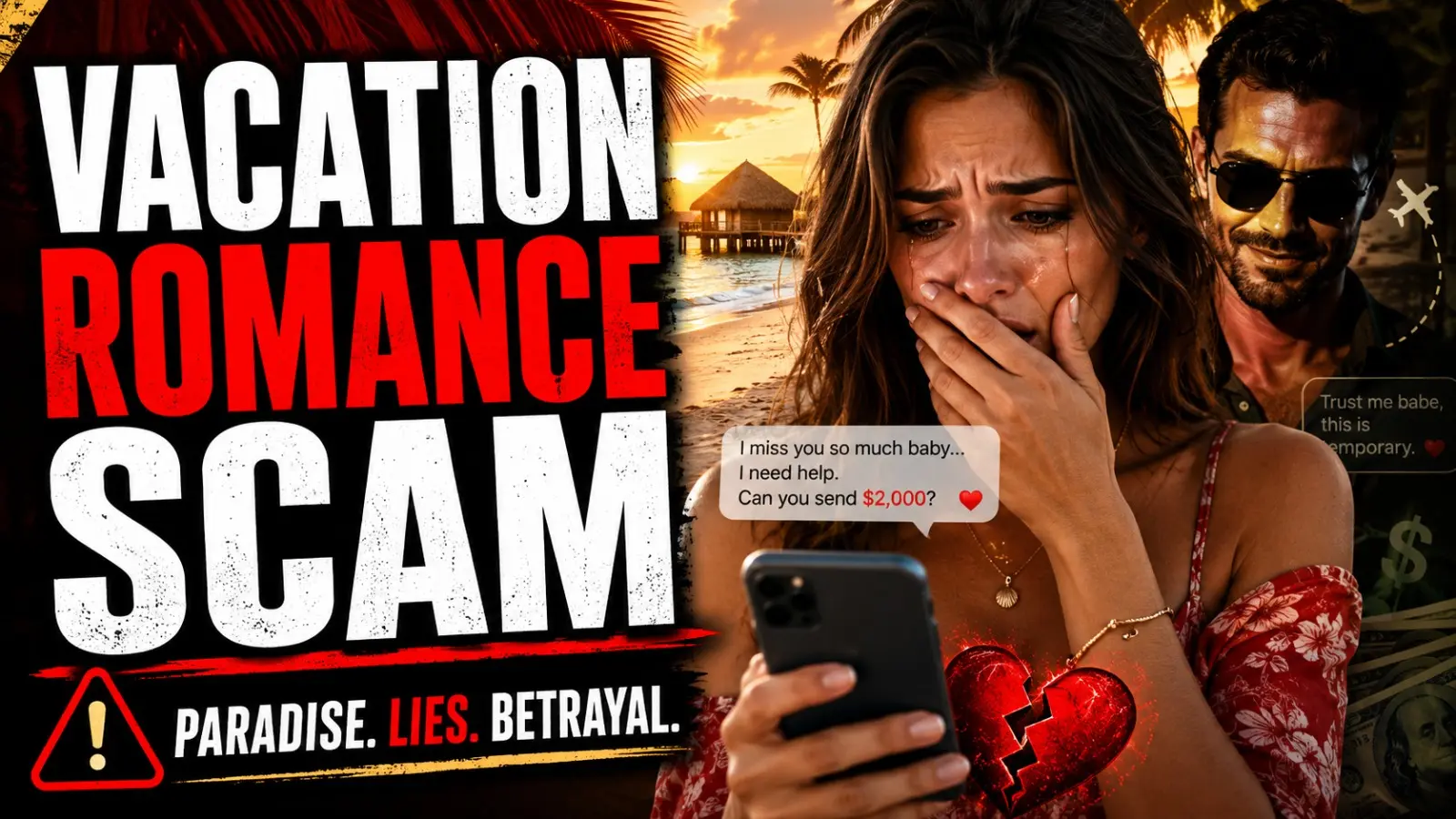
She Fell in Love on Vacation… Then the Romance Scam Began
Watch the external TruthTube video that inspired this independent, expanded field guide. The article below provides the full written analysis, verification steps, internal research paths, and official sources.
YouTube is an external service and may apply its own privacy, cookie, and recommendation policies.A vacation romance scam uses the speed, privacy, and emotional intensity of travel to establish trust, then extends the relationship through messages after the trip. The person may be real and may have met the traveler in person, while still lying about a name, job, family, finances, or intentions. The clearest danger is a pattern of accelerated commitment, secrecy, unverifiable biography, recurring crises, and requests for money, account access, identity documents, gift cards, transfers, or cryptocurrency. Slow the relationship down, verify claims outside the person’s story, involve someone you trust, and never treat affection as proof that a payment is safe.
What to remember
- An in-person meeting confirms only that you met a person—not that the biography, future plans, or financial emergency are genuine.
- Love bombing becomes especially concerning when rapid intimacy is paired with secrecy, isolation, or punishment for reasonable questions.
- A small first request can test whether emotional pressure will override a financial boundary; later requests may escalate in value and urgency.
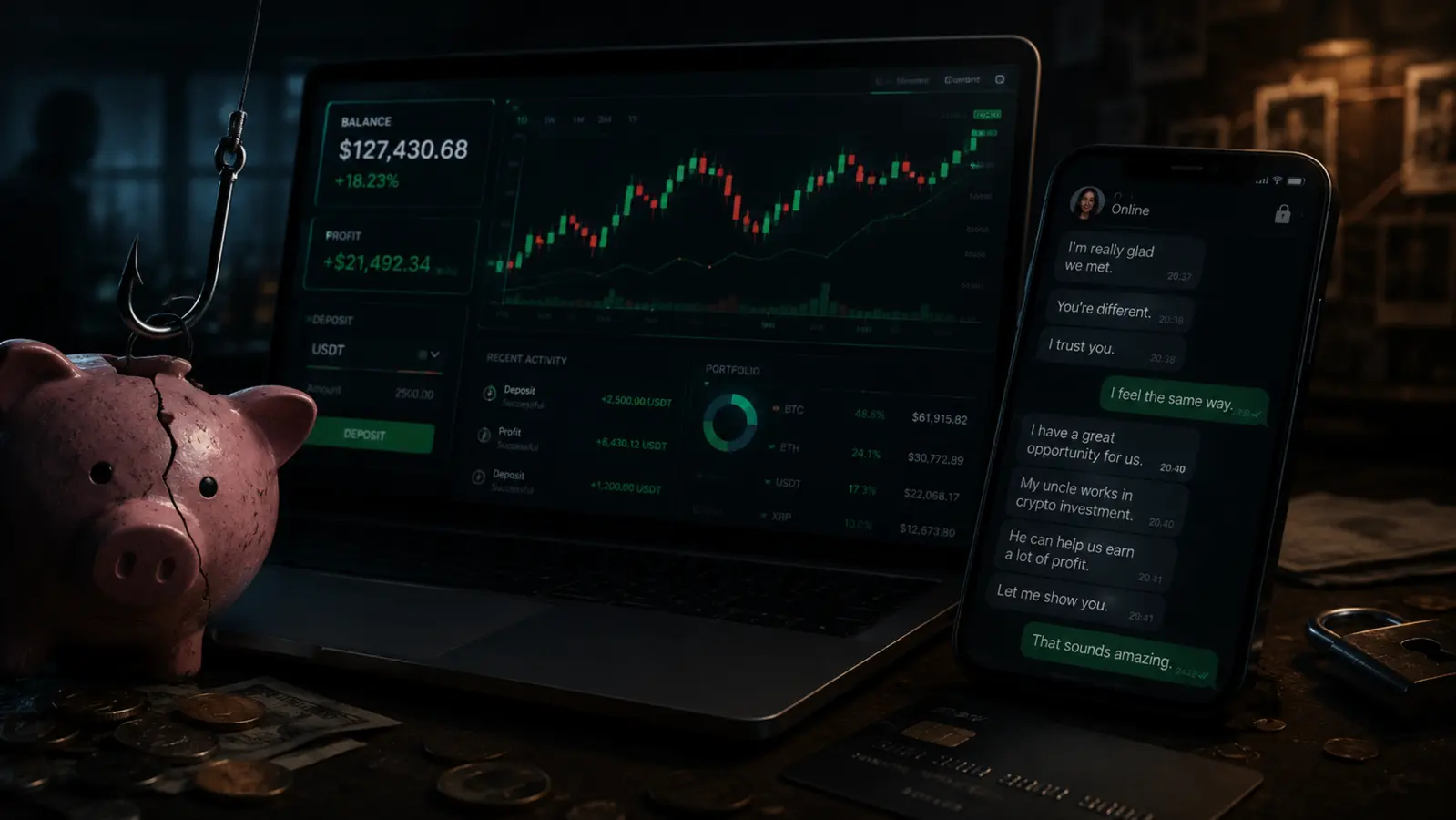
- Relationship investment scams may replace a direct plea for money with a fake trading platform, fabricated profits, or instructions to buy cryptocurrency.
- If money was sent, stop further payments, preserve records, contact the payment provider immediately, and report through official channels.
The scenario: connection in paradise, pressure after the flight home
Imagine a traveler arriving at a resort after a difficult year. Ordinary routines are suspended. The setting is beautiful, time feels abundant, and a friendly stranger seems unusually attentive. He remembers small details, shares personal stories, and suggests that the meeting happened for a reason. Nothing about that encounter, by itself, establishes fraud. People form genuine relationships while traveling every day.
The risk emerges in what happens next. Before the trip ends, the relationship is described as exceptional. After departure, messages arrive every morning and night. Plans for a reunion appear before basic facts have been independently checked. A private connection gradually becomes an urgent commitment, and the traveler is encouraged to protect it from skeptical friends or family. Then a problem appears: a blocked card, a passport complication, a medical bill, a business delay, or a ticket that must be purchased immediately.
This article treats that sequence as a composite pattern, not a report about a named victim. It is based on the educational video featured on this page and on official warnings about romance and relationship investment fraud. The central lesson is simple but often overlooked: meeting someone during a holiday can make the relationship feel verified, yet it authenticates only the meeting. It does not authenticate the person’s legal identity, employment, finances, relationship status, intentions, or later claims.
Why a vacation can make rapid intimacy feel credible
Travel changes context. A person may be outside normal routines, separated from trusted observers, and more willing to interpret unusual behavior as part of the destination. Limited time also compresses decisions. If the new acquaintance says there are only two days left to explore the connection, intensity may feel romantic rather than strategic.
The setting can supply borrowed credibility. A resort, restaurant, tour, or social event feels public and safe, so the person encountered there may inherit some of that trust. But access to a reputable place is not a background check. A polished appearance, local knowledge, confident conversation, or introduction by a casual acquaintance cannot verify the claims that matter before money or sensitive information changes hands.
Vacation memories also create a powerful evidence substitute. Photographs, familiar places, and vivid shared experiences prove that two people spent time together. They do not prove the story told around those moments. When doubt appears later, the victim may replay genuine memories and mistake them for proof that every later message is genuine. Fraud can contain real dinners, real affection, and a real person while the identity or financial purpose remains deceptive.
A safer rule is to let commitment grow at the speed of independent verification, not at the speed of the itinerary. A real relationship can survive a pause, a direct question, or a decision not to send money. A scheme built on momentum usually cannot.
Face-to-face contact reduces some forms of catfishing, but it does not establish the person’s name, marital status, occupation, ownership claims, debts, legal problems, or financial intent.
Love bombing versus ordinary excitement
Early enthusiasm is not a diagnosis and does not prove manipulation. The warning comes from a cluster of behaviors: declarations of destiny before ordinary trust exists, constant contact that leaves little space to think, mirroring of the traveler’s values, premature promises about marriage or relocation, and distress whenever the pace is questioned.
This is emotional acceleration. It can make basic verification feel cold or disloyal. The person may say that asking for identification ruins the magic, that friends are jealous, or that hesitation shows an inability to love. The relationship is then protected from outside scrutiny precisely when outside perspective would be most useful.
Intensity can also create a false sense of accumulated history. Hundreds of messages in two weeks may feel like months of intimacy, but repetition is not corroboration. The same source is supplying the affection, the biography, the crisis, and the explanation for why the crisis cannot be independently confirmed. Volume makes the story familiar; it does not make the story true.
Healthy affection allows both people to maintain ordinary relationships, ask uncomfortable questions, and set financial limits without retaliation. Manipulative courtship treats boundaries as rejection. Watch what happens when you say you need time, will consult someone, or will not send money. The response to a boundary can be more informative than the original request.
- Commitment language arrives before verifiable knowledge of the person.
- Constant messages create obligation or anxiety when you do not respond.
- Questions are reframed as betrayal, prejudice, or proof that you do not care.
- Friends and relatives are described as threats to the relationship.
- The future is discussed in detail while present-day facts remain vague.
A real face can still support a false identity
Many romance-scam warnings focus on stolen profile photographs and people who never meet. The vacation variation requires a broader model. The person may appear on live video and may have spent days with the traveler. The deception can instead involve a false surname, undisclosed partner, fabricated occupation, invented property, borrowed social profile, or criminal associates who help maintain the story.
Verify material claims proportionately. A reverse-image search may reveal copied photographs, but a clean result proves little. Compare names, dates, locations, and employment details across time. Look for an established public history that makes sense as a whole. If a business or professional license matters to the story, locate the relevant registry yourself rather than following a screenshot or link supplied by the person.
Do not turn verification into harassment. Avoid doxxing, hacking, leaked databases, confrontational calls to relatives, or public accusations. The goal is not to expose a stranger online; it is to decide whether your own money, identity, accounts, and safety should be placed at risk. If reliable verification is unavailable, the correct financial decision is to decline—not to investigate indefinitely.
Be alert to document theater. Passport images, contracts, bank screenshots, flight confirmations, hospital invoices, and official-looking letters can be altered or taken from unrelated people. A document should be verified with the institution through contact details you locate independently. Even an authentic document may not prove the interpretation the sender gives it.
When privacy becomes isolation
New couples reasonably want privacy. Isolation is different. It discourages the very conversations that might reveal contradictions or slow a payment. A manipulator may predict that family members will misunderstand, portray friends as lonely or controlling, or insist that the relationship remain secret until a supposed business deal, divorce, visa, or inheritance is resolved.
The result is an information bottleneck. The target hears only the person’s explanation for each new event. When an outsider raises concern, the concern is reported back to the suspected scammer, who supplies a new explanation and may demand proof of loyalty. This cycle can gradually replace independent judgment with relationship management.
Break the bottleneck before a crisis. Tell one calm, trusted person how you met, what has been claimed, and whether money or documents have been requested. Ask that person to examine the timeline rather than judge the romance. If you fear ridicule, choose a consumer-protection adviser, counselor, bank fraud specialist, or victim-support service. Shame is useful to offenders because it keeps evidence and decisions inside the relationship.
Never share intimate images under pressure. The FBI warns that romance scammers may request inappropriate images or financial information that can later be used for extortion. If a threat has been made, preserve it, stop negotiating, tighten account security, and seek official help. Paying does not guarantee that material will be deleted.
The first money request is often a boundary test
The first request may be deliberately modest: a hotel balance, a replacement phone, a short-term ticket, a fee to restore access to an account, or help for a relative. The amount can seem small compared with the emotional value of the relationship. The person promises repayment and presents the transfer as temporary.
That payment changes the relationship. It demonstrates that urgency and affection can move money. It also creates a sunk-cost effect: after helping once, the victim may feel invested in proving that the original decision was sound. A second request can be larger because refusing it would force a painful re-evaluation of the first.
Official warnings describe recurring requests for travel, medical costs, visas, legal trouble, and other emergencies. Payment instructions matter. Gift cards, wire transfers, money-transfer apps, and cryptocurrency are favored in many scams because they can move quickly and may be difficult to reverse. Requests to receive or forward funds are also dangerous; an account can be used to move proceeds from other crimes.
Do not solve the story the person presents. Verify the institution and the obligation. A legitimate hospital, airline, hotel, consulate, lawyer, or bank should be contactable through independently located channels. If the person blocks that verification, demands secrecy, or says the payment must go to an unrelated individual or wallet, stop.
Do not send money, move funds, purchase gift cards, buy cryptocurrency, or provide account access to prove affection. A legitimate relationship does not require financial compliance as evidence of love.
How emergencies escalate and objections become guilt
Once a payment succeeds, crises may arrive in a chain. A flight is missed because another fee was due. A medical discharge is delayed. Customs holds equipment. A lawyer needs a deposit. A business partner disappears. Each event supposedly explains why repayment and reunion must wait a little longer.
The story is difficult to falsify because every missing piece creates another emergency. The person may produce a new official, relative, doctor, lawyer, or colleague who confirms the account. That contact can be an accomplice or another identity controlled by the same operator. Multiple voices do not necessarily mean independent sources.
Emotional language converts a financial question into a moral test: if you loved me, you would help; you are the only person I trust; everything will be lost because you waited. Anger, withdrawal, self-harm threats, or sudden illness may follow resistance. Take any immediate safety threat seriously by contacting appropriate local emergency services, but do not transfer money as crisis management.
Set a written rule before the next request: no payment based on incoming messages, no transfer on the same day as an emergency, and no exception without independent verification and consultation. A predetermined rule removes some of the burden from the emotional moment.
The investment variation: affection becomes a fake financial future
Some relationship scams do not begin with a plea for help. The person presents financial success as a shared future and offers to teach the target how to trade. A website or app may show convincing balances, customer support, and early profits. The romantic contact says the opportunity is a gift, not a request for money.
The SEC’s Investor.gov describes relationship investment scams in which trust built through online or personal contact is used to promote fraudulent investments. The platform may accept a small deposit and sometimes allow an early withdrawal. That apparent success encourages a much larger transfer. When the victim tries to leave, the platform demands taxes, insurance, verification charges, or another deposit.
Never evaluate an investment through the person who introduced it. Identify the legal entity, regulator, asset custodian, withdrawal terms, and risk disclosures independently. Do not use the link, QR code, app file, wallet address, or customer-service contact supplied in the conversation. A dashboard number is not proof that an asset exists or is held for you.
If a romantic contact directs you to cryptocurrency, do not assume the blockchain makes the opportunity legitimate. Cryptocurrency can record a transfer to an address; it does not authenticate the owner, the trading strategy, or a displayed profit. Stop before sending more to unlock funds. Advance fees are often another stage of the loss.
A practical verification protocol before trust becomes financial
Verification is most effective before a crisis. Begin by writing a simple timeline: when you met, names used, locations, work claims, family details, travel plans, account names, and requests. Inconsistencies are easier to see when they are placed side by side instead of absorbed through hundreds of messages.
Confirm identity claims through sources the person does not control. Search photographs and profile details, but do not rely on one tool. Verify a claimed company in an official registry, call institutions using public contact information, and compare the person’s account with durable records. A failed search is not proof of fraud; it means the claim remains unverified.
Separate relationship decisions from financial decisions. Even if you decide to continue the relationship, maintain a complete ban on transfers, loans, joint accounts, investments, package forwarding, identity-document sharing, and access to devices. Do not allow remote-control software or reveal one-time security codes.
Finally, introduce time and another person. Wait at least a full day after an urgent request, then review it with someone who is not emotionally involved. Scammers create artificial deadlines because time allows contradictions to surface and payment providers to intervene. A legitimate emergency can be handled through verified institutions; it should not depend on secret payment to a near-stranger.
- Write the timeline and preserve exact requests.
- Verify names, businesses, documents, and institutions independently.
- Keep romance and money completely separate.
- Use a waiting period for every urgent financial request.
- Ask a trusted outsider to review the facts, not judge the relationship.
- Walk away financially when a material claim cannot be verified.
What to do if you already sent money or information
Stop additional transfers immediately. Do not send a final payment to recover earlier money, release a supposed balance, pay a tax, or prove that you are not abandoning the person. Contact the bank, card issuer, wire service, payment app, gift-card company, or cryptocurrency platform through its official channel. Explain that the payment may be connected to fraud and ask whether it can be stopped, recalled, disputed, or flagged.
Preserve evidence before blocking accounts: profile URLs, usernames, phone numbers, email addresses, message exports, photographs, documents, receipts, bank details, wallet addresses, transaction hashes, dates, and the names of any supposed professionals. Keep original files when possible. Do not alter records or continue contact merely to gather more evidence if doing so exposes you to pressure or danger.
Secure the information that was shared. Change reused passwords from a trusted device, review email forwarding and recovery settings, enable strong multi-factor authentication, and contact financial institutions if account or identity details were disclosed. If government identification was shared, follow the issuing authority’s guidance and consider the identity theft recovery steps relevant to your country.
Report the account to the platform where contact occurred and use the appropriate national fraud channel. In the United States, the FTC accepts reports at ReportFraud.ftc.gov and the FBI directs internet-crime reports to IC3. Other countries have their own official services. Reporting may not guarantee recovery, but it creates a record, can support disruption, and helps institutions connect related complaints.
How to help a victim without making the scammer stronger
Ridicule can deepen isolation. A person who expects to hear “how could you believe that?” may hide payments, defend the relationship more strongly, or return to the only person offering comfort—the suspected offender. Begin with safety and facts: you are not alone; skilled manipulation can affect capable people; let us protect what remains.
Avoid forcing an immediate public confession or demanding that every emotional attachment disappear at once. Ask permission to review the timeline, sit with the person during calls to payment providers, and help preserve records. Focus on stopping new losses and restoring independent support. If coercion, threats, depression, or self-harm concerns are present, involve qualified local services.
Prepare for follow-up scams. Names and transaction details may be sold or reused. Someone may pose as law enforcement, a lawyer, a hacker, a regulator, or a fund-recovery specialist and promise guaranteed recovery for an advance fee. Verify every incoming contact independently. Real authorities and financial providers should be reached through official channels you locate yourself.
Emotional recovery can outlast the financial event. The victim may be grieving a relationship that felt real even when parts of it were fabricated. That grief is not evidence of foolishness. Practical recovery works best when it restores agency, connection, and informed boundaries rather than replacing one form of control with another.
The traveler’s before, during, and after checklist
Before traveling, tell a trusted contact where you are staying, use unique account passwords, protect the primary email account, and avoid carrying unnecessary identity or financial documents. Meet new acquaintances in public, keep control of transportation, and do not allow a new contact to photograph a passport, card, or account screen.
During the trip, notice whether the person respects ordinary boundaries. Keep access to your own phone, room, money, and itinerary. Do not let romance turn into pressure to invest, open an account, transport a package, sign a document you do not understand, or conceal the relationship from everyone at home.
After returning, resist the idea that distance must be overcome through financial rescue. Continue verifying at an ordinary pace. If a reunion is genuine, each adult should use transparent travel arrangements and pay through established providers. Never send money to unlock a passport, visa, inheritance, customs shipment, or investment balance.
The goal is not suspicion toward every travel connection. It is to preserve the conditions in which a healthy relationship can become clearer and a manipulative one cannot gain financial control. Trust should expand with consistent, independently verifiable behavior—not with urgency, secrecy, or a growing record of payments.
Questions people ask
Can it still be a romance scam if we met in person?
Yes. An in-person meeting confirms that you met someone, but not that the person’s name, history, relationship status, employment, financial claims, or intentions are genuine. Evaluate the full pattern and independently verify material claims.
Is fast affection always love bombing?
No. Early excitement alone does not establish manipulation. Concern rises when intensity is paired with secrecy, isolation, inconsistent identity claims, punishment for questions, or pressure involving money and sensitive information.
Should I send a small amount just to test whether they repay me?
No. A small transfer exposes payment details, crosses a financial boundary, and may be used to justify larger requests. Verification should not require funding an unverified emergency.
What if the person asks me to receive money rather than send it?
Do not use your account to receive, convert, or forward funds for an unverified contact. The money may come from another victim or crime, creating financial and legal risk. Contact the institution’s fraud team.
Can a legitimate-looking crypto app prove the investment is real?
No. A polished dashboard and displayed profit do not prove custody or withdrawal. Verify the legal entity and regulator independently, and never pay an additional fee to unlock supposed proceeds.
What is the first step after a payment?
Stop further payments and contact the payment provider immediately through an official channel. Preserve messages and transaction details, secure exposed accounts, and report through the relevant national fraud service.
Research note: TruthTube prioritizes government publications, primary records, scientific standards, and official reporting channels. This article is educational and does not replace legal, financial, medical, or psychological advice.
This article was researched using official records, regulator notices, court documents, law-enforcement releases, provider documentation and reputable reporting. Material claims were checked against the cited sources.
AI tools may have assisted with research organization, language refinement, transcription or illustration, but factual claims were reviewed by Lavi, Founder & Editorial Lead.
Published July 12, 2026. This page is scheduled for review when official guidance, reporting channels, scientific standards, or relevant laws change.