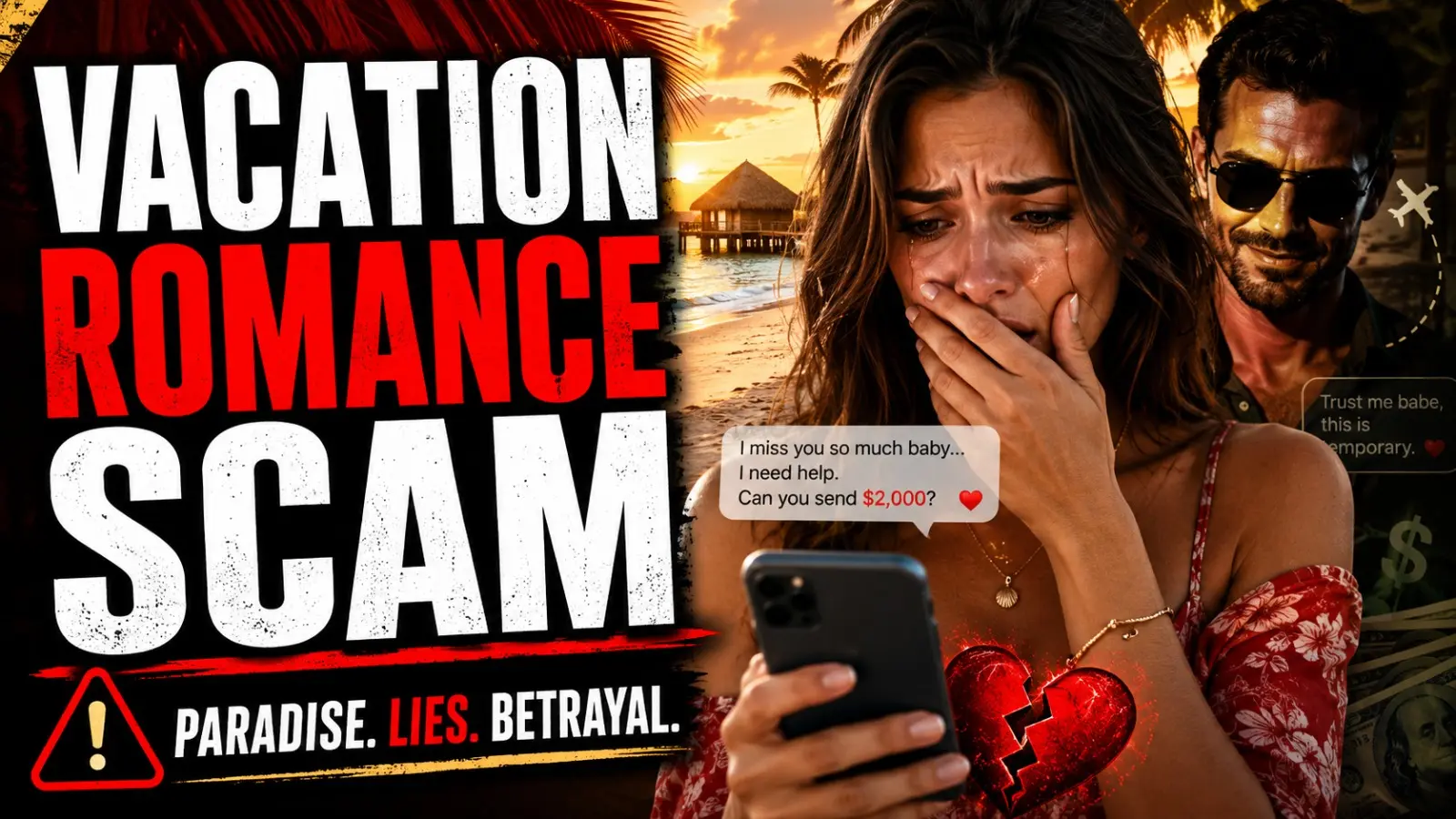

A romance scam is an online relationship built around a false identity and an eventual attempt to obtain money, valuables, account access, personal information, or financial participation. The strongest warning is not one awkward message; it is a pattern: rapid intimacy, chronic reasons not to meet, movement away from the original platform, escalating emergencies, investment talk, secrecy, and requests that place your money or identity at risk. Stop payments, preserve the conversation, verify the person independently, tell someone you trust, and report the account through official channels.
What to remember
- Never send money, cryptocurrency, gift cards, banking access, or identity documents to a person you have not independently verified in real life.
- A video call is useful but not conclusive; stolen footage, prerecorded clips, face manipulation, or an accomplice can support a false identity.
- Repeated emergencies and barriers to meeting are more important than any single excuse.
- Moving quickly from a dating platform to private messaging removes safety signals and can isolate the conversation.
- Victims deserve support, not ridicule. Shame delays reporting and creates opportunities for follow-up scams.
How romance scams build trust before asking for money
The first stage often looks ordinary. A profile expresses interest, asks attentive questions, remembers details, and communicates at a reliable rhythm. The person may appear unusually compatible because the conversation is adjusted around the target’s preferences, losses, routines, and hopes. Nothing in that opening proves fraud. Healthy relationships also begin with curiosity and frequent contact. The difference emerges when intimacy grows faster than verifiable reality.
Romance fraud is a confidence scheme. The relationship itself becomes the mechanism that lowers skepticism. A criminal may spend weeks or months developing emotional dependence before introducing a crisis, investment, business opportunity, travel problem, customs fee, medical expense, or request to receive funds. The FTC warns that romance scammers commonly create fake profiles, build a relationship, and then ask for money. Some combine the relationship with cryptocurrency investment fraud, presenting financial participation as a shared future.
The conversation can feel intensely personal while remaining operationally one-sided. You may know the story the person tells, but not have independently confirmed their legal name, location, employment, family, or history. A persuasive biography is not the same as an authenticated identity. The safest approach is to let trust grow at the same speed as verifiable contact.
- Affection becomes intense before ordinary trust has had time to form.
- The person mirrors your values and future plans with unusual precision.
- Daily contact creates pressure to prioritize the relationship over outside opinions.
- Questions gather personal context while answers about the other person remain difficult to verify.
15 romance scam warning signs
No checklist can diagnose a stranger, and one missed video call does not make someone a criminal. Use these signs as prompts to pause and verify. The concern rises when several appear together, when explanations keep changing, or when the relationship begins to affect your money, accounts, or isolation from other people.
- The profile appears polished but has a thin, recently created, or inconsistent history.
- The person pushes to leave the dating platform almost immediately.
- Declarations of love or destiny arrive unusually fast.
- They always have a reason they cannot meet in person.
- Live video is repeatedly avoided, cut short, dark, silent, or inconsistent.
- Their stated location, schedule, accent, career, or life details do not align over time.
- They claim a job that conveniently explains distance, secrecy, travel, or poor connectivity.
- A sudden crisis appears after emotional trust is established.
- They ask for gift cards, cryptocurrency, a wire, cash, a loan, a phone, or travel money.
- They offer to teach you to invest or direct you to a trading platform.
- They ask you to receive, move, convert, or forward money for them.
- They request identity documents, banking credentials, one-time codes, or intimate images.
- They discourage you from discussing the relationship with family or friends.
- Questions about verification are reframed as betrayal or lack of love.
- After a loss, a new person promises recovery in exchange for another fee.
The stories romance scammers commonly use
A recurring biography does not prove that a profile is fraudulent, but familiar narratives help explain how distance and urgency are manufactured. The person may claim to be deployed, working on an offshore project, traveling as a doctor or contractor, managing an overseas business, or dealing with a frozen account. These roles explain why meetings fail, why communication is irregular, and why money supposedly cannot be accessed directly.
The financial request is often presented as temporary and morally urgent: a child needs care, equipment is held by customs, travel documents were stolen, a contract payment is delayed, or a family member is ill. Later, the request may shift from emergency relief to investment. The FTC has warned that when an online love interest offers to teach you cryptocurrency investing, the supposed lesson can lead directly to a fraudulent platform.
Some victims are asked to move money rather than send their own. That can create legal and financial danger. Receiving funds, opening accounts, purchasing cryptocurrency, or forwarding packages for an unverified romantic contact may involve stolen money or property. Stop and contact the relevant financial institution before acting.
A real person can face travel delays or medical emergencies. The decisive issue is whether identity and circumstances can be independently verified—and whether affection is being used to override ordinary financial safeguards.
How to verify an online relationship without becoming an investigator
Verification should be lawful, proportionate, and respectful. Do not publish accusations, contact relatives aggressively, buy leaked personal data, or attempt to hack an account. Begin with ordinary consistency. Compare what the person says across time. Ask for a normal live conversation at a mutually reasonable time. A genuine contact may value privacy, but a serious relationship should not depend indefinitely on secrecy and unverifiable exceptions.
Use reverse-image search to check whether profile photographs appear under different names or on unrelated pages. Remember that no result proves authenticity; an image may be new, private, or AI-generated. Search the claimed profession or organization through its official website rather than a link the person supplies. If a meeting is planned, use a public place, tell someone you trust, and arrange your own transportation.
Most importantly, separate romantic trust from financial authorization. Even if the person is real, do not share account access or send money you cannot afford to lose. An authentic identity does not guarantee honest intentions. Financial decisions deserve the same independent checks you would use outside a relationship.
- Keep communication on the platform until basic trust is established.
- Ask for live, natural interaction rather than accepting a polished clip.
- Check images and biographical claims across independent sources.
- Never use a link supplied by the contact to verify their employer, bank, or investment.
- Discuss the relationship with someone who is not emotionally invested in it.
When romance turns into investment fraud
Romance-investment fraud combines emotional grooming with a fabricated financial opportunity. The person may show screenshots of profits, describe a private strategy, or direct you to an app or website that looks professional. Early withdrawals or small apparent gains can create confidence. The displayed balance may be entirely fictional, and later attempts to withdraw can trigger demands for taxes, verification fees, security deposits, or additional investments.
No online romantic partner can guarantee investment returns. Legitimate investments involve risk, verifiable registration where required, independent custody arrangements, and documentation that does not depend on a private messaging thread. Do not grant remote access to your device, install a financial app from an unofficial link, or transfer cryptocurrency to a wallet controlled by the contact.
If money has already been sent, stop immediately. Contact the bank, exchange, payment provider, or card issuer through an official number. Preserve wallet addresses, transaction identifiers, messages, profile links, and receipts. Report to the platform and the appropriate national fraud service. Be cautious of anyone who claims to recover cryptocurrency for an upfront payment.
What to do when you suspect a romance scam
Create distance before confronting the story. Do not warn the contact about every inconsistency or share the exact evidence you are checking; the conversation may simply be adjusted. Stop payments and transfers. Secure any account or device the person could access, change reused passwords, enable multi-factor authentication, and notify financial providers if credentials or codes were shared.
Preserve evidence privately. Save the profile URL, usernames, dates, payment records, email addresses, phone numbers, and relevant messages. Avoid reposting intimate images or personal information. Report the account to the dating or social platform and use official fraud-reporting channels. In the United States, the FTC accepts reports at ReportFraud.ftc.gov and internet-enabled fraud can be reported to the FBI’s IC3.
Tell a trusted person. Emotional manipulation is easier to evaluate with support, and a second person can help organize calls, reports, and account security. If intimate material is being used for threats, do not pay automatically; preserve the demand and contact appropriate law enforcement or a recognized victim-support service.
How to help someone you believe is being deceived
Direct ridicule often strengthens the scammer’s isolation strategy. The person may defend the relationship because admitting doubt also means confronting grief, embarrassment, and financial loss. Start with curiosity: ask what has been independently verified, whether money has been requested, and what advice the person would give a friend in the same situation.
Focus on one concrete safeguard, such as pausing the next payment or calling the bank together. Avoid taking control of accounts without authority. If cognitive impairment or immediate financial exploitation is suspected, seek advice from qualified local services and financial institutions. Preserve dignity throughout the process.
Recovery is emotional as well as financial. The relationship may have felt real even if the identity was false. Support should recognize the loss without validating the deception. Continued contact may expose the person to new emergencies, threats, or recovery scams, so practical boundaries and account security matter.
A safer way to date online
Online dating can be meaningful and safe without treating every new contact as suspicious. Keep early expectations realistic, protect personal information, and allow time for identity and behavior to become consistent. Avoid sharing a home address, workplace details, financial information, identity documents, or intimate images before trust is established.
Use unique passwords and multi-factor authentication on email, dating, and social accounts. Review what public posts reveal about grief, finances, travel, family, and routine. Scammers use personal context to make messages feel tailored. Privacy settings reduce exposure but do not replace judgment.
Make one rule non-negotiable: romance does not bypass financial verification. Never borrow, invest, receive funds, or surrender account control because affection, guilt, urgency, or a promised future makes delay feel disloyal.
Cross-border reporting and the limits of recovery
Romance fraud commonly crosses platforms, payment systems, and national borders. A profile may claim one country, operate from another, receive money through a third, and use an account opened with a stolen identity. This complexity does not make reporting pointless. Multiple reports can connect usernames, devices, wallets, bank beneficiaries, and scripts that appear unrelated to one victim.
Report first to the payment provider and the platform, then to the official fraud service where you live. Provide transaction references and profile URLs rather than only narrative. If an institution requests documents, use the secure route listed on its official website. Do not send identity documents to an address supplied by the romantic contact or a supposed recovery agent.
Recovery depends on speed, payment method, destination, institutional controls, and legal process. A bank may freeze funds that have not moved; a card issuer may investigate a charge; gift-card companies may act on unused value. None of these outcomes is guaranteed. The honest promise is prompt action, not certain reimbursement.
International organizations and local police have different roles. A victim usually begins with the domestic reporting path rather than attempting to identify a foreign police unit. Preserve the evidence in its original language and note translations separately.
After reporting, reduce further exposure. Criminal networks may reuse the victim’s details, sell a list of responsive targets, or impersonate investigators. Verify every later contact through a publicly listed agency number and never pay a fee to release evidence, compensation, or recovered funds.
Why identity verification must be layered
No single online check proves that a relationship is safe. A reverse-image search can find a stolen photograph but cannot prove that an image with no result is genuine. A video call can confirm that a person appeared on camera but cannot establish the biography, intentions, or financial story attached to that face. Employment pages, identification images, and travel documents can also be copied or fabricated.
Layered verification asks several independent questions. Does the person interact naturally over time? Do biographical claims remain consistent? Can the claimed employer or profession be confirmed through a source you found yourself? Does the person make ordinary plans to meet safely? Do financial boundaries remain respected? Each answer reduces uncertainty without pretending to eliminate it.
Verification should not become surveillance or harassment. Do not access private accounts, publish a suspected scammer’s personal information, contact every person in a photograph, or purchase illicit records. The goal is to protect your decisions, not to conduct a public investigation.
The emotional recovery after a false relationship
Discovering a romance scam creates a complicated loss. The person presented may not have existed, yet the conversations, routines, hopes, and emotional attachment were experienced as real. Friends may focus only on the money and overlook grief, humiliation, anger, and distrust.
Recovery begins with safety: stop contact, secure accounts, preserve evidence, and obtain financial help. Emotional recovery can include support from trusted people or a qualified counselor. Avoid groups that pressure victims to share private evidence or promise to identify the offender.
A victim may return to contact because the scammer offers explanation, apology, threat, or renewed affection. This does not mean the person wants to be harmed. It reflects the strength of the attachment and the difficulty of accepting a constructed relationship. Compassionate boundaries are more effective than ridicule.
What dating and social platforms can do
Platforms can reduce risk through identity and device signals, payment-request detection, warnings when conversations move off-platform, reporting tools, and preservation procedures for lawful requests. They should avoid implying that a badge or automated scan makes a user safe.
Users need clear controls to block and report without alerting the other account. Reports should accept profile links, payment requests, impersonated images, and threats while minimizing unnecessary collection of intimate conversations. Cross-platform coordination can help when the same identity appears repeatedly.
No safety system catches every scheme. Criminals adapt language, move to encrypted services, and use real people alongside fabricated identities. Product design should support skepticism, but financial boundaries and independent verification remain essential.
How to analyze the relationship without letting one detail decide
Begin with a chronology rather than a verdict. Record when the profile appeared, when communication moved platforms, when intimacy escalated, which meetings failed, when money or investment first entered the conversation, and how the explanations changed. A timeline often reveals acceleration and repetition that are difficult to see inside daily messages.
Separate identity claims from emotional claims. “I miss you” may be sincere or manipulative, but it cannot verify a name, location, employer, or emergency. List each factual claim and the independent source that supports it. A photograph sent by the same person is not an independent source; neither is a document hosted on a website they control.
Review the payment pathway. Who receives the money? Is the beneficiary the person you know, a relative, an agent, an exchange, a mule, or an unfamiliar company? Why can the person not use ordinary financial channels? Requests to split payments, conceal purpose, convert funds, or accept money on someone else’s behalf deserve immediate professional advice.
Notice how boundaries are treated. A healthy contact may feel disappointed but respects a decision not to pay, invest, share documents, or move communication. A manipulative contact uses guilt, anger, withdrawal, crisis, or declarations of trust to make a boundary feel cruel. The reaction to “no” can be more informative than the original request.
Finally, invite a calm outside review. Show the full pattern—not only the most romantic messages or the most suspicious screenshot—to someone trustworthy. Decide in advance that no payment will occur until identity and circumstances are verified through channels the contact did not provide. Time is an investigative tool available to every consumer.
Questions people ask
Can a romance scammer participate in a live video call?
Yes. A live call can be supported by stolen video, manipulation, poor lighting, an accomplice, or a real person using a false biography. Treat video as one data point, not complete identity verification.
Should I confront the person with reverse-image results?
You can end contact without debating. Preserve the results and report the profile. Public accusations can misidentify innocent people whose photographs were stolen.
Is it a scam if the person never asked me for money?
Not necessarily, but requests may come later or involve information, account access, package forwarding, or investments rather than a direct payment. Watch the overall pattern.
Can money sent in a romance scam be recovered?
Sometimes a provider can stop or recall a transfer if contacted quickly, but recovery is never guaranteed. Contact the provider immediately and avoid paid recovery promises.
Where should I report it?
Report the profile to the platform and use your country’s official fraud-reporting service. U.S. consumers can use ReportFraud.ftc.gov and IC3.gov.
Research note: TruthTube prioritizes government publications, primary records, scientific standards, and official reporting channels. This article is educational and does not replace legal, financial, medical, or psychological advice.
This article was researched using official records, regulator notices, court documents, law-enforcement releases, provider documentation and reputable reporting. Material claims were checked against the cited sources.
AI tools may have assisted with research organization, language refinement, transcription or illustration, but factual claims were reviewed by Lavi, Founder & Editorial Lead.
Published July 11, 2026. This page is scheduled for review when official guidance, reporting channels, scientific standards, or relevant laws change.