

You usually cannot confirm a voice-cloning scam by listening for glitches. Treat any unexpected emergency call that asks for money, secrecy, account information, or immediate action as unverified—even when the voice sounds perfect. Hang up, call the person back using a number you already know, contact another trusted person, and use a private family verification word or question. Never send gift cards, cryptocurrency, cash, or a wire transfer until the story has been independently confirmed.
The call may arrive at dinner, during work, or in the middle of the night. A familiar voice says there has been an accident, an arrest, a medical emergency, or a kidnapping. The caller sounds frightened. They may know family names, travel plans, a workplace, or details pulled from social media. Then comes the instruction that turns concern into a financial emergency: do not tell anyone, do not hang up, and send money now.
That sequence is the modern version of a long-running family-emergency or “grandparent” scam. Artificial intelligence did not invent the deception. It made one of its most persuasive elements—the voice—easier to imitate. The U.S. Federal Trade Commission warns that a criminal may obtain a short audio clip from content posted online and use a voice-cloning program to sound like a relative. The FBI has similarly warned that criminals can use AI-generated audio to impersonate personal relations and request money.
The most important change in your safety strategy is therefore simple: recognition is no longer authentication. “It sounds like her” is an emotional observation, not proof that she is on the line. Your protection comes from a verification process that the caller does not control.
Five rules that stop most emergency-call scams
- Pause. Urgency is part of the persuasion, not evidence that the story is true.
- Hang up. You are allowed to end the call, even if the voice sounds distressed.
- Call back independently. Use a saved number, not a number supplied by the caller.
- Verify with another person. Contact a parent, partner, friend, workplace, school, or other trusted channel.
- Do not pay under pressure. Gift cards, crypto, cash couriers, and secrecy are major danger signals.
What is an AI voice-cloning scam?
An AI voice-cloning scam is an impersonation scheme in which synthetic or manipulated audio is used to make a criminal sound like a real person. The impersonated person might be a child, grandchild, spouse, friend, executive, bank employee, lawyer, doctor, or public official. The audio may be used in a live call, a voicemail, or a voice message sent through a messaging app.
Voice cloning belongs to the broader category of AI and deepfake scams involving synthetic media: content generated or altered with artificial intelligence. Synthetic audio itself has legitimate uses in accessibility, entertainment, localization, and communication. The risk arises when it is used to misrepresent identity, create false authority, or obtain money or information through deception.
The FBI’s Internet Crime Complaint Center explains that criminals can use AI-generated audio to impersonate a relative in crisis, request immediate financial assistance, demand a ransom, or attempt to gain access to accounts. The same technology can support business-email-compromise-style attacks when a supposed executive calls an employee and orders an unusual payment.
Does a scammer need hours of recorded speech?
Not necessarily. Official consumer guidance warns that even a short clip may be useful to a voice-cloning system. Public videos, podcasts, livestreams, voice notes, outgoing voicemail greetings, and social posts may provide source audio. That does not mean everyone who has posted a video will be cloned. It means families should stop treating a familiar voice as a security credential.
The practical response is not to erase every recording from the internet or panic about every phone call. It is to reduce unnecessary public exposure where reasonable, review social-media privacy settings, and create a verification routine that remains reliable even if the voice is flawless.
How the family-emergency scam works
Understanding the structure helps you recognize the pressure without providing a blueprint for wrongdoing. Most versions rely on four broad stages.
A trusted person appears to make contact
The caller claims to be a relative or someone acting for them. A spoofed caller ID, copied profile photo, or familiar voice may strengthen the impression. Caller ID is not reliable proof: displayed numbers can be manipulated.
A story creates fear and mental overload
Common narratives involve an accident, arrest, medical bill, lost phone, detention while traveling, or another event that makes delay feel dangerous. The exact story matters less than the emotional effect.
The target is discouraged from checking
The caller may say the situation is embarrassing, legally confidential, or too dangerous to discuss. A supposed lawyer, police officer, doctor, or kidnapper may take over the call. Secrecy prevents the one action most likely to expose the lie: independent verification.
Money or sensitive information is demanded
The request may involve gift cards, cryptocurrency, a wire, a payment app, cash, account credentials, or identity documents. The criminal favors speed and payment methods that may be difficult to reverse.
The caller does not need a technically perfect performance. Stress changes how people listen. When someone believes a loved one is in danger, background noise, a poor connection, crying, whispered speech, or a claimed injury can explain differences in the voice. The criminal’s strongest tool may be the crisis narrative, with synthetic audio serving as reinforcement.
“I will hear a robotic tone or unnatural pause if the voice is fake.”
Audio artifacts may exist, but they are not a dependable consumer test. Compression, stress, background noise, and ordinary call quality can mask or imitate them.
Why “listen carefully” is not enough
Some synthetic voices may mispronounce a name, use unusual phrasing, lose emotional consistency, or respond awkwardly. Those details can justify additional caution, but they should never be your only test. A real relative may sound different because of fear, illness, injury, noise, or a weak connection. A well-prepared impersonator may also know how the person speaks.
The safer question is not “Does this audio sound fake?” It is “Can I verify this person and story outside this call?” That shift moves the decision from subjective detection to a repeatable security procedure.
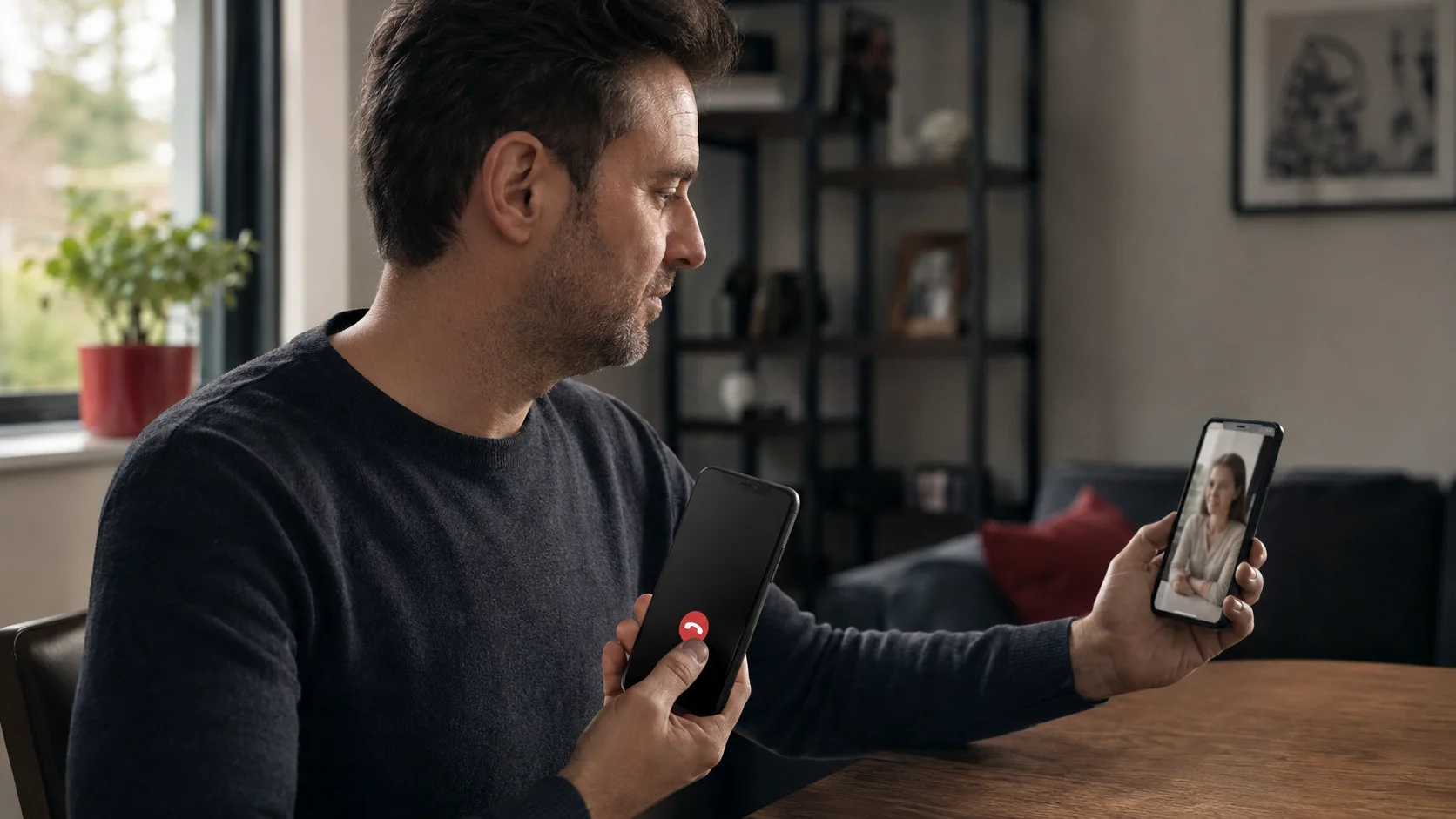
Twelve warning signs of a fake emergency call
No single sign proves that a call is fraudulent. Several appearing together should move you immediately into verification mode.
- The contact is unexpected. You were not already discussing the situation with the person through a known channel.
- The caller demands immediate action. You are told that waiting minutes will cause an arrest, injury, account loss, or other disaster.
- You are told to keep the call secret. The caller says not to contact parents, a spouse, friends, a bank, or law enforcement.
- The caller resists a callback. They claim the phone will be confiscated, the connection cannot be restored, or verification will worsen the emergency.
- A second authority figure appears. A supposed lawyer, officer, doctor, bail agent, or company executive gives the story an official tone.
- The payment method is unusual. The demand involves gift cards, cryptocurrency, a wire, cash, a payment app, or a courier.
- The requested recipient is unfamiliar. The money is not going to a hospital, court, company, or person you independently verified.
- Caller ID is treated as proof. The caller points to a familiar name or number on your screen as evidence of identity.
- Personal details are used to earn trust. Names, travel plans, workplaces, schools, and relationships may have come from public posts or compromised data.
- Normal procedures supposedly do not apply. You are told that a court, police department, hospital, or bank requires secrecy or immediate payment in gift cards or crypto.
- The caller wants credentials or codes. They ask for a password, one-time code, Social Security number, banking login, or a photo of identity documents.
- Your attempt to slow down creates aggression. The caller becomes threatening, repeats the deadline, or tries to keep you continuously engaged.
The 60-second verification protocol
When the call feels real, a short procedure is easier to remember than a long checklist. This scam-prevention verification protocol should be taught to relatives before an emergency occurs.
Stop the transaction
Do not transfer money, read out a code, click a link, or provide personal information. Take a breath. You do not need the caller’s permission to pause.
End the contact
Say, “I am going to verify this,” and hang up. If the caller claims hanging up will cause harm, treat that pressure as another warning sign.
Call a known number
Use the number already saved in your contacts or one obtained independently. Do not redial the incoming number and do not use a callback number supplied during the call.
Expand the verification
If the person does not answer, contact another relative, partner, friend, workplace, school, or travel companion. Use your private family word or question if direct contact is possible.
If the caller claims to represent a police department, hospital, bank, court, or other institution, find its official number yourself. Call the institution and ask whether the person, case, or request exists. Do not rely on a website or link sent by the caller.
What should you ask the caller?
A personal question can help, but avoid questions whose answers are public, easily guessed, or visible on social media. Birthdays, pet names, schools, and addresses may not be secret. A prearranged family word or a deliberately private question is stronger. Even then, use a callback or second channel whenever money or sensitive information is involved.
Build a family anti-cloning plan before the phone rings
The best time to design a verification process is when nobody is frightened. A ten-minute family conversation can protect children, parents, grandparents, caregivers, and anyone authorized to make payments.

- Choose a private word or phrase. Do not use a pet name, birthday, address, or phrase posted online. Change it if it is disclosed.
- Decide who verifies whom. Identify two or three trusted contacts who can confirm a person’s safety.
- Save important numbers. Store close relatives, schools, caregivers, workplaces, banks, and travel contacts before they are needed.
- Set a payment rule. Agree that nobody in the family will send emergency money based on one call or message alone.
- Protect public audio. Review who can access videos and voice posts. Avoid publishing unnecessary details about travel or routines in real time.
- Practice once. A brief rehearsal makes it easier to follow the plan under stress.
The FBI’s guidance on generative-AI fraud specifically recommends creating a secret word or phrase with family members. It also advises independently researching contact information and calling the person or organization directly. A family word is useful, but it should complement—not replace—independent verification.
Payment requests that should stop the conversation
Emergency scammers prefer methods that move quickly and may be difficult to recover. The FTC repeatedly warns that demands for gift cards, cryptocurrency, cash, or wire transfers are common scam signals. A caller may tell you exactly which store to visit, instruct you to buy cards at several locations, ask for the numbers and PINs, or stay on the phone while you complete the purchase.
Gift cards are not a legitimate way to pay bail, taxes, medical fees, utilities, or a government agency. A request for the card number and PIN gives the other person access to the value even while the physical card remains in your hand. Cryptocurrency transfers and wires may also be difficult to reverse. The correct response is to stop, contact the financial provider using an official channel, and verify the underlying story.
What to do if you already sent money or information
Act quickly, but do not let embarrassment delay the response. Skilled fraud schemes are designed to override ordinary decision-making. Being deceived does not make a person foolish, and blaming the victim only gives criminals more time.
- Contact the payment provider immediately. Call the bank, card issuer, wire service, payment app, cryptocurrency platform, or gift-card company through an official number. Explain that the payment was induced by fraud and ask whether it can be stopped, recalled, frozen, or flagged.
- Secure affected accounts. Change compromised passwords from a trusted device, enable multi-factor authentication, sign out unfamiliar sessions, and contact the institution’s fraud department. Never share a one-time security code with an incoming caller.
- Preserve evidence privately. Keep call logs, voicemails, messages, receipts, wallet addresses, usernames, transaction records, and the number displayed. Do not publish the material or personal information online.
- Report the fraud. Reports help authorities identify patterns, even when recovery is uncertain. Use the official channels listed below.
- Warn the impersonated person. They may need to review privacy settings, notify contacts, and watch for additional impersonation attempts.
- Expect recovery scams. Criminals may contact victims again, claim they can recover the money, and demand an upfront fee. Verify any follow-up independently.
If there is a credible, immediate threat to someone’s physical safety, contact the appropriate emergency service using a number you obtain independently. Do not transfer money to an unverified caller as a substitute for contacting authorities.
Where to report an AI voice-cloning scam
Use the appropriate official scam-reporting channels. Do not send sensitive evidence to TruthTube, social-media groups, or amateur investigators.
Report consumer fraud to the Federal Trade Commission at ReportFraud.ftc.gov. Report internet-enabled crime to the FBI Internet Crime Complaint Center. Contact local law enforcement when appropriate.
Use the Canadian Anti-Fraud Centre reporting system and contact local police when money or identity information is involved.
Report fraud and cybercrime through Action Fraud. For immediate danger, use the appropriate emergency service.
Consult Scamwatch and submit reports through the official Australian reporting pathways it identifies.
Seek online-safety support through Netsafe and report criminal or urgent matters to the appropriate police channel.
Are AI-generated voice calls illegal?
In the United States, the Federal Communications Commission ruled in February 2024 that AI-generated voices fall within the Telephone Consumer Protection Act’s restrictions on “artificial or prerecorded voice” calls. The ruling gives regulators and state attorneys general additional tools against unlawful robocalls using cloned voices. It does not mean every legitimate use of synthetic speech is prohibited; consent requirements, call purpose, and other legal rules still matter. Fraud, extortion, impersonation, and caller-ID spoofing may also trigger separate laws.
For consumers, the legal distinction should not determine the immediate safety response. An unexpected call demanding money or sensitive information should be independently verified whether the voice is generated, replayed, impersonated by a person, or genuine but the account has been compromised.
Questions people ask about voice-cloning scams
Can caller ID prove that my relative is calling?
No. Caller ID can be spoofed, and a messaging or social account can be compromised. End the contact and call a number already saved or independently verified.
Can I use a voice-detector app?
Detection tools may be useful in specialized settings, but a consumer should not delay a safety decision while waiting for an automated score. Detection can produce false positives and false negatives, especially with noisy or compressed audio. Independent identity verification remains the more dependable response.
Should I ask the caller to repeat a difficult phrase?
Do not rely on an improvised audio test. A real person under stress might struggle, and a synthetic or human impersonator might respond convincingly. Use a private family word and a separate callback channel.
What if my relative does not answer the callback?
Contact another person who can verify their location or safety. Depending on the claim, that might be a partner, parent, friend, workplace, school, hotel, or local authority. Lack of an immediate answer does not validate the original caller’s story.
Should families stop posting videos online?
There is no single rule for every family. Consider limiting public access to unnecessary voice recordings, avoiding real-time travel details, reviewing follower lists, and making children’s accounts private. Assume, however, that some voice material may remain available and build a verification plan that does not depend on secrecy alone.
What is the best family safe word?
Choose something memorable but not publicly associated with the family. Avoid birthdays, addresses, pet names, school mascots, and answers visible in posts. Keep the phrase private, use it only for verification, and replace it if exposed.
Can a cloned voice access my bank account?
The FBI has warned that criminals may use AI-generated audio in attempts to access accounts. Financial institutions use different security controls, so contact yours to ask how voice authentication is protected and what additional safeguards are available. Never provide passwords or one-time codes to an incoming caller.
What should I say before hanging up?
You do not need to argue. Say, “I am going to verify this through another number,” then end the call. A genuine loved one or legitimate institution should understand the need for verification.
What this scam teaches us about trust
For generations, a familiar voice carried a powerful assumption: the person who sounded like your child, parent, friend, or colleague was probably that person. Synthetic media weakens that shortcut. The answer is not permanent suspicion. It is a better form of trust—one supported by a small, humane process.
Pause. End the pressured contact. Reconnect through a known channel. Ask the private question. Confirm with someone else. These actions may feel awkward for less than a minute. That minute can protect a family’s savings, privacy, and peace of mind.
Research note: This guide relies primarily on official consumer-protection and law-enforcement sources. It explains defensive actions and intentionally omits operational details that could facilitate impersonation fraud.
This article was researched using official records, regulator notices, court documents, law-enforcement releases, provider documentation and reputable reporting. Material claims were checked against the cited sources.
AI tools may have assisted with research organization, language refinement, transcription or illustration, but factual claims were reviewed by Lavi, Founder & Editorial Lead.
First published July 11, 2026. This article will be reviewed when official guidance, reporting channels, or relevant regulations change. See an error? Use the standards form below.